
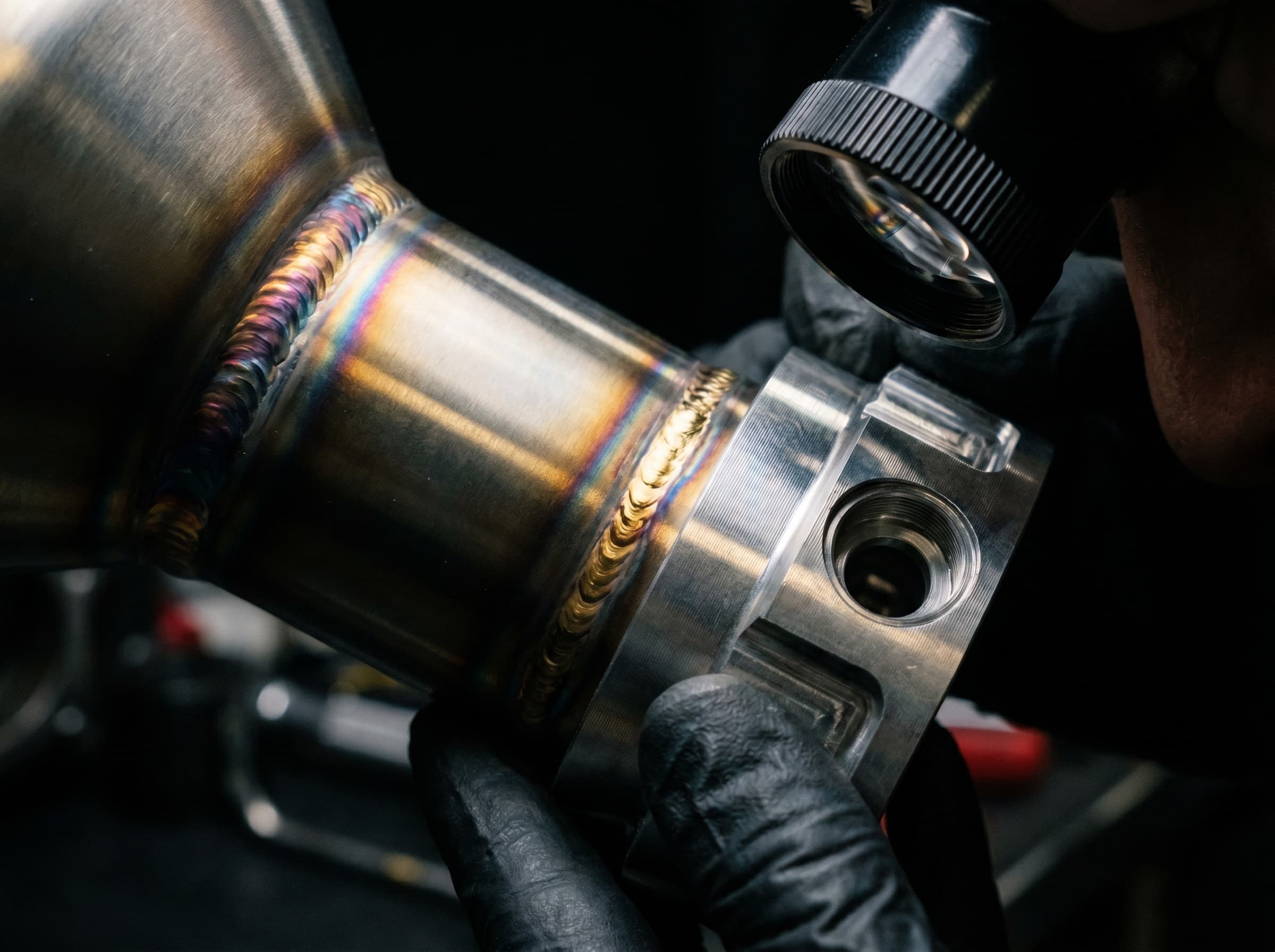
Catless vs high-flow catted downpipes: which is better for a street-driven AMG or BMW?
Catless downpipes maximise sound and flow but almost guarantee emissions lights and legal issues, while 200-cell high-flow catted pipes are quieter and more street-friendly compromises.
Introduction
For a street-driven AMG or BMW, a 200-cell high-flow catted downpipe is the better choice. Catless downpipes may offer marginal performance gains and a louder exhaust note, but they almost always cause check engine lights and will likely fail Victorian roadworthy inspections.
The Details
The difference between catless and high-flow catted downpipes comes down to one thing: the catalytic converter.
A catless downpipe removes the factory catalytic converter entirely. This eliminates the most restrictive part of the exhaust flow path, allowing exhaust gases to exit the turbo more freely. The result is slightly better turbo response, slightly more power at the top end, and a louder, more aggressive exhaust note.
A high-flow catted downpipe replaces the factory catalytic converter with a sports unit featuring a larger cell count. The factory cat in most modern BMW and AMG vehicles is typically a 600-cell count, which is very restrictive. A 200-cell high-flow cat offers a significant improvement in flow while still performing the emissions function, keeping the exhaust gases cleaner than a catless setup.
For the M133 and M177 engines in AMG A45, C63 and other models, as well as the N55 and B58 engines in BMW M Performance vehicles, the high-flow cat provides the vast majority of the performance benefit with far fewer downsides.
The Risks and Trade-offs
Catless downpipes carry serious practical consequences:
- Check engine light: The OBD system monitors catalytic converter efficiency. Without a cat, the sensors detect a massive drop in conversion efficiency, triggering a catalyst efficiency code that stays on
- Inspection failure: In Victoria, roadworthy inspections include an emissions check. A catless downpipe will fail a roadworthy certificate
- Legal risk: Running without a catalytic converter is an offence under Victorian emissions regulations
- Noise complaints: Catless downpipes are significantly louder, which can be problematic for daily driving
- Resale complications: Future buyers may want the car to pass inspection, and removing a cat is a mod most buyers will want reversed
High-flow catted downpipes have far fewer drawbacks:
- Small risk of a faint CEL on some platforms, though 200-cell cats typically pass OBD monitoring
- Passes Victorian roadworthy inspections when properly installed
- Provides most of the performance gains of a catless setup
- Maintains reasonable drivability and sound levels for street use
The Sherzad Haus Approach
We do not install catless downpipes on client cars. Our position is simple: the practical consequences are not worth the marginal performance gain.
For clients wanting more exhaust flow for Stage 2 or Stage 2+ builds, we recommend quality 200-cell high-flow catted downpipes from reputable manufacturers. On most MQB and BMW platforms, these provide a real improvement in turbo spool and top-end power without triggering emissions warnings or failing inspections.
We will always be upfront about what passes inspection in Victoria and what does not. If you are building a track-only car with a dedicated trailer, that is a different conversation. For street-driven vehicles in Geelong, the high-flow cat is the clear winner.
Conclusion
Catless downpipes may be louder and slightly freer-flowing, but they cause check engine lights, fail inspections, and create legal headaches. High-flow catted downpipes offer the vast majority of the performance benefit while remaining street-legal and inspection-compliant. For any daily-driven AMG or BMW, the 200-cell high-flow cat is the smart choice.
To find out what downpipe options suit your car, book a free Performance Health Check and we can discuss your goals.
Our Hardware & Exhaust calibrations are engineered using the exact data driven methodology described in this guide.
Learn About Hardware & ExhaustRelated Technical Guides
Aftermarket Intake Worth It on Tuned Euro Cars?
Intakes provide minimal power gains (5-10 kW) on stock-turbo cars. We explain why most owners justify them for sound and aesthetics instead.
Are lowering springs or coilovers necessary to handle the extra power from tuning?
While not strictly required, many tuned-car owners upgrade suspension to manage body roll and traction, noting that extra power is more usable with better damping and alignment.
Do I need a downpipe to get pops and bangs on my Golf R, S3 or AMG?
A freer-flowing downpipe can make pops louder, but the presence and intensity of pops and bangs are mainly controlled by the tune rather than the hardware alone.