
Is Stage 2 Tune Reliable for Daily Driving? The Honest Answer
Stage 2 daily drivers are common in Australia. We break down what hardware and maintenance is required, and why most failures trace back to skipped mods or poor servicing.
Short answer: a Stage 2 tune does not damage an engine when the hardware, fuel and calibration all match and the car is serviced on time. Most Stage 2 problems trace back to missing supporting parts, 95RON fuel, a heat soaked intercooler or skipped servicing.
Stage 2 is not inherently unreliable, but it does require more from the car. Owners who respect that reality run Stage 2 daily without problems. Those who do not pay for it.
What Stage 2 Actually Demands
Stage 2 on MQB platforms (Golf R, GTI, Audi S3) raises boost and torque targets beyond what the stock downpipe, intercooler and cooling system were designed for. To run Stage 2 reliably, several things need to be in order:
Exhaust Flow
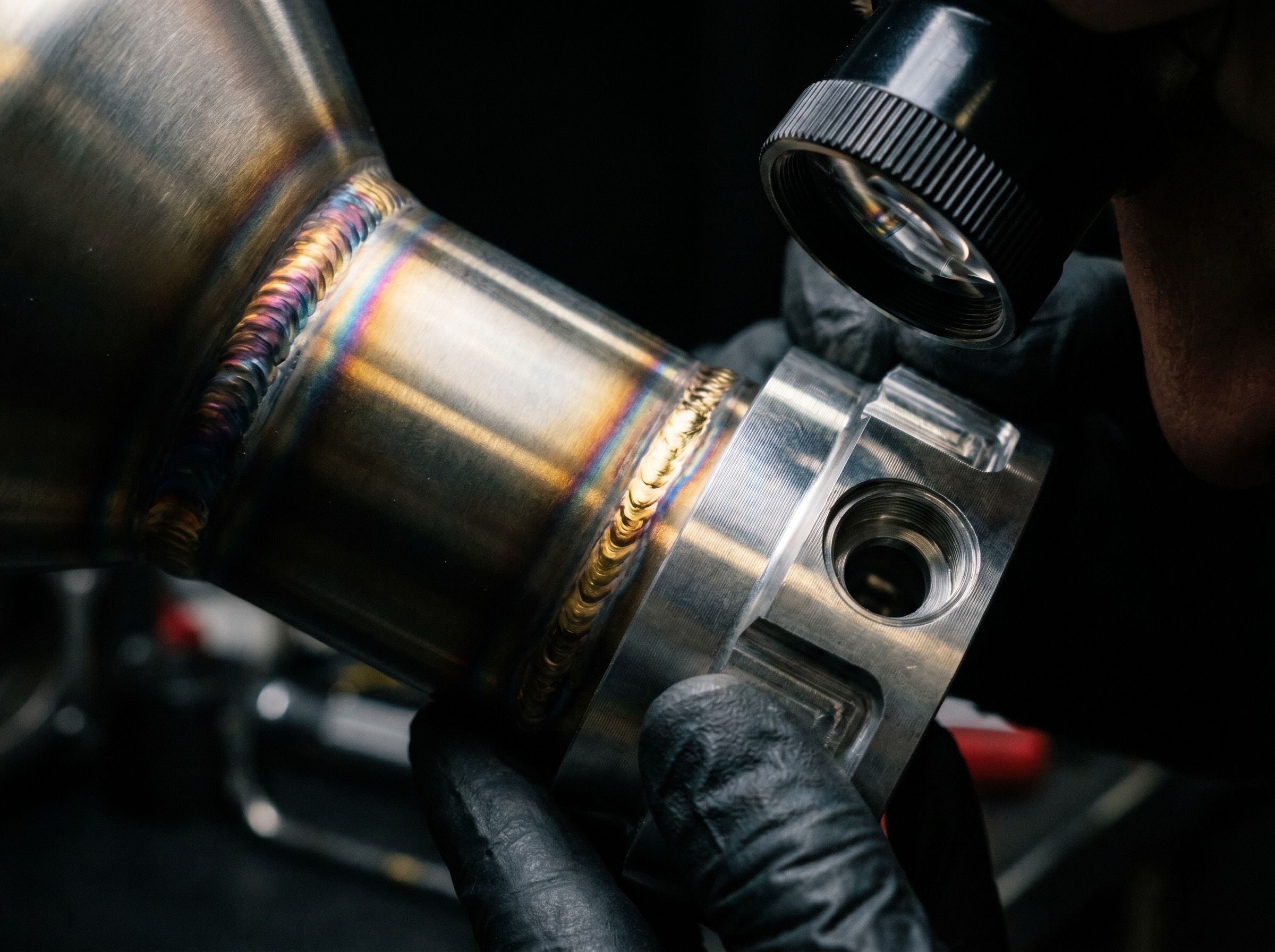
A Stage 2 map on a stock downpipe creates higher exhaust gas temperatures because the turbo is working harder against backpressure. A free flowing downpipe (high flow catted or 200 cell) allows the turbo to exhale properly, reducing EGTs and improving reliability.
Charge Air Cooling
The stock intercooler is adequate for factory boost. Stage 2 boost levels cause noticeable heat soak on repeated pulls in summer. An upgraded intercooler keeps intake air temperatures lower and more consistent, protecting the engine and maintaining power.
Servicing Discipline
Stage 2 cars benefit from closer attention to oil quality and change intervals, Haldex service on AWD Golf Rs, and DSG fluid changes if applicable. This is not optional.
Fuel Quality
Stage 2 maps are calibrated for 98RON. Running 95RON regularly will cause knock events and timing retardation, reducing power and increasing wear.
Where the Reliability Problems Come From
Forum posts about Stage 2 failures almost always involve one or more of these scenarios:
- Stage 2 map applied to a stock car without a downpipe. This creates the EGT and heat soak problem.
- 95RON fuel used as the primary fuel. Knock and timing pull are guaranteed.
- Skipped Haldex servicing. The Haldex coupling in the Golf R AWD system wears quickly with neglected fluid.
- DSG fluid never changed. DSG clutches and mechatronics fare better with fresh fluid under higher torque loads.
- Aggressive maps with torque targets above gearbox limits. Some maps push torque beyond what the DQ381 or DQ500 can handle without a TCU tune.
Stage 2 as a Daily Driver
With the right supporting hardware and maintenance, Stage 2 MQB cars make excellent daily drivers. The power delivery is stronger across the rev range, the midrange is more usable and the torque multiplication through the gear ratios makes the car feel genuinely fast rather than just peaky.
Thousands of Golf R and S3 owners in Australia have run Stage 2 daily for years without mechanical failures. The common thread among successful Stage 2 owners is attention to the basics.
What actually breaks on Stage 2 daily drivers
The failures you hear about are rarely caused by the stage level alone. They trace back to a few common mistakes.
Poor fuel: Stage 2 maps are calibrated for 98 RON premium fuel. Running 95 or lower causes knock, retarding timing and potentially pre ignition events that stress the engine over time. If you fill up with whatever is cheapest, the map will pull power to protect itself, and you will not see the gains you paid for.
Heat: Without an upgraded intercooler, intake air temperatures climb quickly on repeated pulls or in hot weather. The engine will pull timing to avoid knock, and you lose power. In worst cases, heatsoak leads to rough idle or stalling. An upgraded intercooler solves this for most daily drivers.
Skipped maintenance: Stage 2 puts more stress on spark plugs, coils and the Haldex coupling. If you skip the plug changes, run old oil or ignore the Haldex fluid, failures happen. The stage does not cause the failure; neglect does.
Aggressive maps: Some tune files are written for maximum power with thin safety margins. These can run fine on a fresh car with good fuel, but they will expose weaknesses in older components. A conservative Street Safe Stage 2 map delivers strong gains without the fragility.
The Sherzad Haus Approach
We recommend Stage 2 for MQB cars in Geelong and Melbourne only when the supporting hardware is present. We will assess your car during the pre tune health check and explain exactly what is needed before we apply a Stage 2 map. We will not apply a Stage 2 map to a car that arrives with stock hardware unless you are committed to completing the supporting modifications.
We also log the car post tune across multiple runs, checking EGTs, fuel trims and coolant temperatures to confirm the map is performing correctly on your specific vehicle and fuel setup.
Sherzad Pro Tip: Forum failures almost always involve one of these: no downpipe, 95RON fuel, skipped Haldex servicing, or DSG fluid never changed. Stage 2 with the right supporting hardware is a proven daily driver combination.
Book a Health Check if you want to know whether your car is ready for Stage 2.
Our ECU Tuning calibrations are engineered using the exact data driven methodology described in this guide.
Learn About ECU TuningRelated Technical Guides
Audi ECU and TCU Tuning in Geelong: S3 and RS3 Guide
What to know before you tune an Audi in Geelong: platforms we tune, Stage 1 and TCU costs, unlocks for newer cars and how an engine and DSG tune work together.
BMW ECU Tuning in Geelong: B48, B58 and S58 Guide
What to know before you tune a BMW in Geelong: platforms we tune, Stage 1 and Stage 2 costs, ECU unlocks on newer cars, tools used and what to check first.
Burble Tune Damage: What It Does to Your Engine and Exhaust
Aggressive burble maps raise exhaust temps and kill cats and mufflers faster. We explain the real costs of running crackle maps daily.