
Stage 1 vs Stage 2 ECU Tune: What Is the Difference?
Stage 1 is a software only tune on factory hardware. Stage 2 builds the calibration around supporting parts like a downpipe and intake. What each involves, what it costs and which suits you.
Short answer: Stage 1 is a software only tune for a car with factory hardware. Stage 2 is a calibration written for a car that has supporting hardware fitted, such as a downpipe, intake or intercooler. Stage 2 is the bigger step, and it needs the parts to be there first.
What is a Stage 1 tune?
Stage 1 changes the engine software and nothing else. It is the simplest way to tune a car because no hardware is needed and the car stays as the factory built it. At Sherzad Haus, Stage 1 starts from $700 + GST. More on what changes in what a Stage 1 tune changes.
What is a Stage 2 tune?
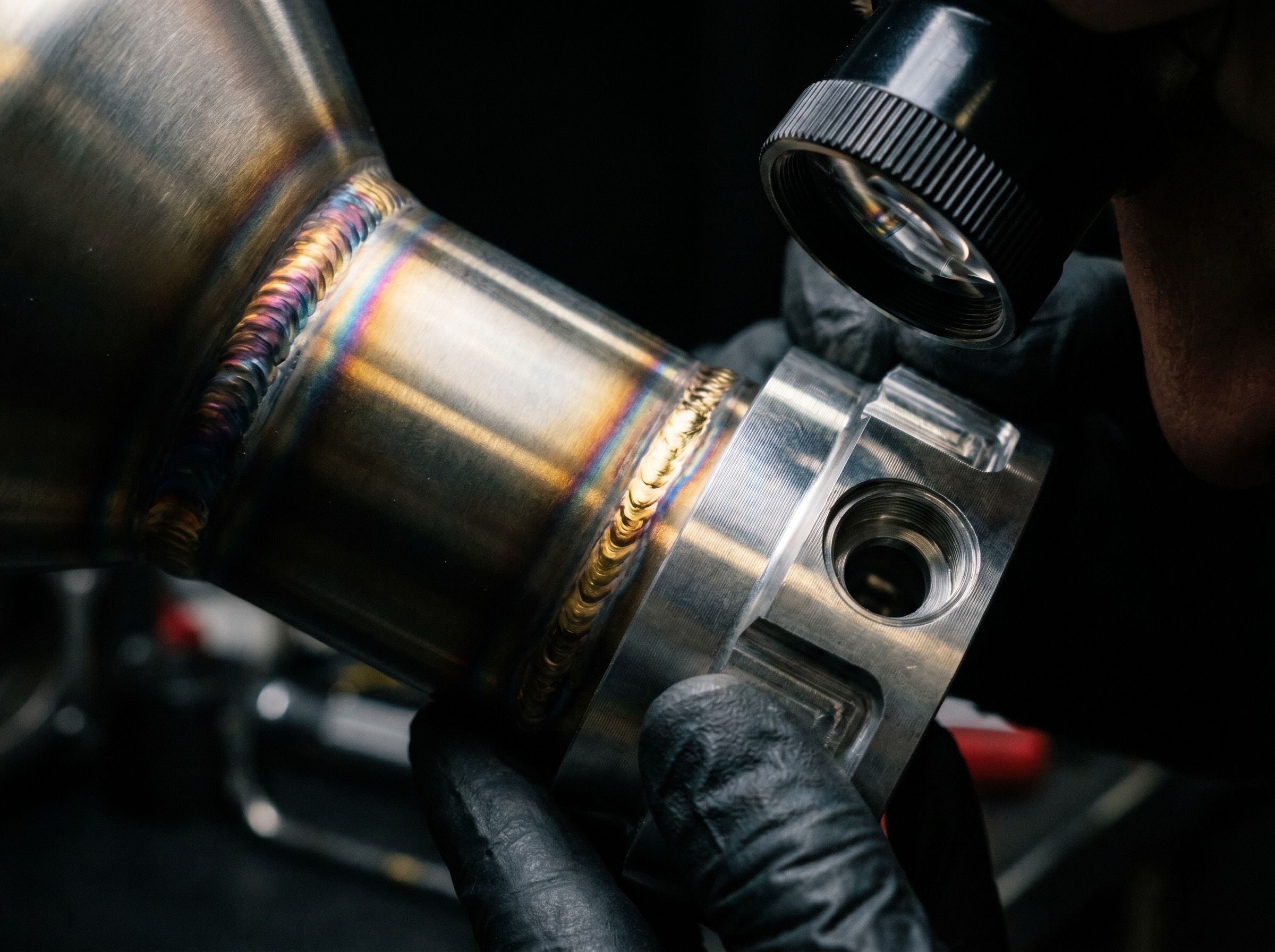
Stage 2 is a calibration written around hardware you have added. The usual parts are a downpipe, an intake and sometimes an intercooler. The tune has to match what is fitted, so we build it for your exact car. Stage 2 starts from $1,100 + GST, and that is the tune fee only. Parts and fitting are extra. A downpipe fitted by us starts from $300 for a single or $600 for a double, plus parts.
Which one is right for you?
- Choose Stage 1 if you want a stronger, sharper daily driver with no hardware changes.
- Choose Stage 2 if you already have the supporting parts, or you plan to fit them and want a tune matched to them.
- If you are not sure, start with Stage 1. You can move to Stage 2 later.
Things that apply to both
- Both are written for 98RON fuel. Read why 98RON matters.
- Servicing matters more on a tuned car.
- Warranty and registration rules apply. See tuning and warranty and Victorian rules.
- On DSG cars, a matching TCU tune is worth considering alongside either stage.
What it costs
Full prices are in our ECU tune price guide. For a Golf R, GTI or S3, read the section below on daily drivers.
Stage 1 on a daily Golf R, GTI or S3
Stage 1 on the MQB platform gives a big step in midrange torque, with the most meaningful change between about 50 and 130 km/h. This is the range where you are merging onto the Geelong bypass, overtaking on the Surf Coast Highway or threading through Melbourne traffic.
The power gain is immediate and linear. Throttle response is crisper. The car feels more willing without feeling like a project car.
For most owners who drive in traffic, carry passengers and do regular highway runs, Stage 1 is more than enough.
When Stage 2 makes sense on a daily
Stage 2 is worth considering if:
- You already have a downpipe or are planning hardware upgrades
- You are frequently on spirited drives or track days at Phillip Island or Winton
- You want the full sound and power potential of the platform
- You are committed to more attentive servicing
Stage 2 on a completely stock car is not recommended by reputable tuners.
How we do it in North Geelong
We read your original file, build a custom map for your car, log data under road load, road test and verify before the car goes back to you. Over a year in business, rated 4.9 from 61 Google reviews. See Stage 1 and Stage 2.
Get a free health check on your Euro. We'll give you honest advice on what mods make sense for your goals.
Our ECU Tuning calibrations are engineered using the exact data driven methodology described in this guide.
Learn About ECU TuningRelated Technical Guides
Audi ECU and TCU Tuning in Geelong: S3 and RS3 Guide
What to know before you tune an Audi in Geelong: platforms we tune, Stage 1 and TCU costs, unlocks for newer cars and how an engine and DSG tune work together.
BMW ECU Tuning in Geelong: B48, B58 and S58 Guide
What to know before you tune a BMW in Geelong: platforms we tune, Stage 1 and Stage 2 costs, ECU unlocks on newer cars, tools used and what to check first.
Burble Tune Damage: What It Does to Your Engine and Exhaust
Aggressive burble maps raise exhaust temps and kill cats and mufflers faster. We explain the real costs of running crackle maps daily.