
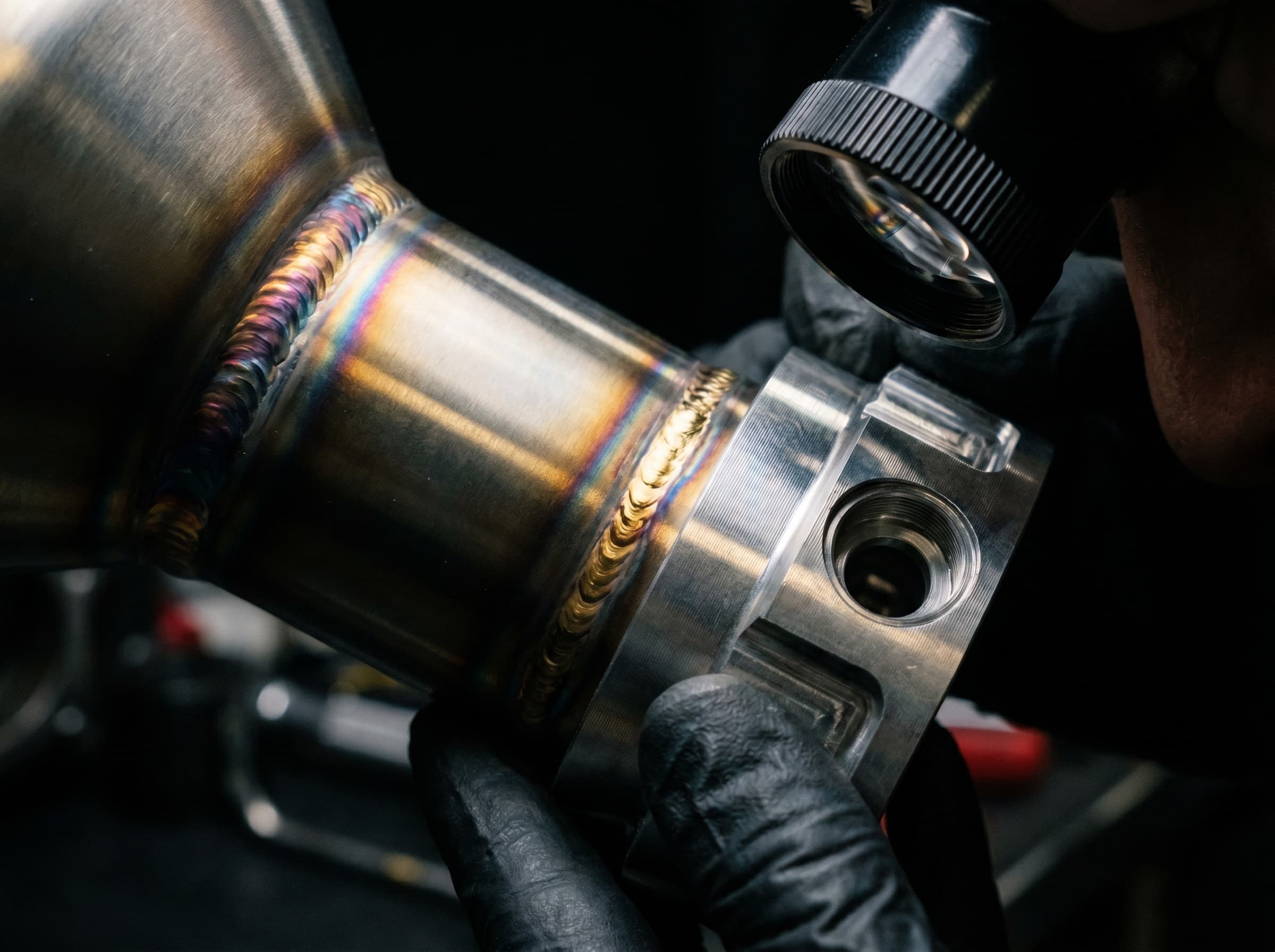
Turbo Inlet and Charge Pipe Upgrade: Worth It for Stage 1-2?
Turbo inlets and charge pipes provide small airflow improvements, typically 5-15 kW. We explain when they are worth the investment.
Introduction
A turbo inlet or charge-pipe upgrade provides small, measurable improvements in airflow and turbo spool on Stage 1-2 VW/Audi cars, but the gains are modest. They are best viewed as supporting modifications rather than primary power adders.
The Details
A turbo inlet is the pipe that connects the air intake to the turbo compressor inlet. On many MQB platform cars (Golf GTI, Golf R, Audi S3, etc.), the stock inlet is made of plastic and has some flow restrictions, particularly in the geometry of the bends.
A charge pipe connects the turbo compressor outlet to the intercooler. The stock charge pipes on these cars are often plastic and can flex slightly under high boost, which can lead to boost leaks over time.
Upgraded inlets and charge pipes are typically made from aluminium or silicone, offering smoother internal surfaces and better resistance to heat and pressure. The theoretical benefit is:
- Turbo inlet: Smoother airflow into the compressor, slightly improving efficiency and reducing turbulence
- Charge pipes: More consistent boost delivery, no flex, and no risk of the boost leaks that can affect stock pipes
On a well-tuned car, these modifications can yield around 5-15 horsepower, depending on the platform and what other modifications are present. The turbo spool can also improve slightly because the engine does not have to work as hard to overcome restrictions.
The Risks and Trade-offs
The practical reality is that these are small upgrades, not game-changers:
- Cost vs gain: You are spending several hundred dollars for a modest improvement that you may not feel in normal driving
- Diminishing returns: If the car is running Stage 1 with no other mods, the inlet and charge pipes are very low priority compared to the tune itself
- Installation complexity: Some inlet upgrades require removal of the front bumper or other significant work, increasing labour costs
These modifications make the most sense as part of a comprehensive Stage 2 or higher build where you are already installing a downpipe, intercooler, and other supporting modifications. On their own, they are not worth the investment for most daily-driven cars.
The Sherzad Haus Approach
We consider turbo inlets and charge pipes to be supporting modifications, not first-tier upgrades. If a client is building a Stage 2 car with a downpipe and intercooler, we recommend including upgraded charge pipes as part of the package for reliability and consistency.
However, if a client comes to us wanting to add power to a stock car, we would not recommend starting with inlets and charge pipes. The tune provides far more value, and those modifications should come later in the build order.
We are happy to install these upgrades as part of a comprehensive build, but we are upfront that the power gains are modest and they should be considered part of a larger modification plan rather than a standalone upgrade.
Sherzad Pro-Tip: These are supporting mods for Stage 2+ builds. If you are looking for your first modification, start with the tune. The tune provides far more value than $500 in charge pipes.
Conclusion
To discuss the best modification path for your goals, book a free Performance Health Check and we can recommend a prioritised build plan.
Our Hardware & Exhaust calibrations are engineered using the exact data driven methodology described in this guide.
Learn About Hardware & ExhaustRelated Technical Guides
Aftermarket Intake Worth It on Tuned Euro Cars?
Intakes provide minimal power gains (5-10 kW) on stock-turbo cars. We explain why most owners justify them for sound and aesthetics instead.
Are lowering springs or coilovers necessary to handle the extra power from tuning?
While not strictly required, many tuned-car owners upgrade suspension to manage body roll and traction, noting that extra power is more usable with better damping and alignment.
Catless vs high-flow catted downpipes: which is better for a street-driven AMG or BMW?
Catless downpipes maximise sound and flow but almost guarantee emissions lights and legal issues, while 200-cell high-flow catted pipes are quieter and more street-friendly compromises.